The Top Architect-Designed Products of Milan Design Week 2014

This week marked the 53rd edition of the Salone Internazionale del Mobile in Milan. Hundreds of exhibitors showcased an endless display of the latest international design products and home-furnishings. Among them included a variety of designed items envisioned by some of our favorite architects. Continue after the break to preview some of the most talked about architect-designed products featured this week at the Milan Design Week 2014.

Benedetta Tagliabue for Passoni Nature: Sofa ‘BOTAN’

A comfortable wood and fabric seat whose components join like the petals of a flower, producing endlessly harmonious, balanced combinations, inspired by nature.

David Adjaye for Knoll: The Washington Skeleton and Skin 

David Adjaye’s cantilevered chairs establish a play between propping and balancing, so that they are simultaneously functional and sculptural. Washington Skeleton is reduced to a fine geometric lattice while its inverted counterpoint, Skin, offers a colorful envelope to the same form.

Zaha Hadid for Citco: Tela Shelving 

According to design aficionado Lisa Roberts, Zaha Hadid’s new shelving collection with Citco “blurs the boundaries of art and design.”

UNStudio for Artifort: Gemini

Gemini comprises two asymmetrically-designed seat elements and a small matching table to offer plenty of scope for variation.

Daniel Libeskind for Poliform: Web

Just like the Internet allows users to browse and use a collection of contents which are connected to each other by links, WEB – with its alternating blocks and voids – presents a brand new bookcase concept with a strong visual impact and devised for the most disparate uses.

Nendo for Emeco: The SU Collection 

Su, a traditional Japanese concept meaning minimal, served as the primary inspiration for this new collection of stools and tables made from reclaimed materials.

MVRDV for Sixinch: Vertical Village

The Vertical Village: a self-organized and initiated manner of city building inspired by richness of informality found in East Asian settlements prior to being overcome by economically-driven block towers. 

Charles & Ray Eames (1958) for Vitra: Aluminium Chair EA 101, EA 103, EA 104

Vitra has now launched models EA 101, 103 and 104 that belonged to the original 1958 product family and was first marketed as the Aluminium Dining Chairs, expanding the selection of chairs in the Aluminium Group with models that are smaller, lighter and brighter. 

Nendoprint-chair

A chair whose surface mixes two different patterns, created by printing woodgrain patterns onto wood with an already distinctive grain.

Daniel Libeskind for Lasvit: ICE

A bold, geometric chandelier that achieves a ‘one-of-a-kind’ luminosity through the delicate and fluid quality of hand-blown glass.

Compare this year’s participation with the top architect-designed products of the Milan Design Week 2013.

[ccw-atrib-link]

Designing for Sound In Our Everyday Spaces

In this interesting article in the New York Times, Allison Arieff highlights the often unconsidered importance of sound in architecture (outside of theaters and museums at least). She profiles the work of Acoustic Engineers at ARUP who have begun to work inschools and hospitals, taking into account the effects poor environments can have on us in our everyday lives. You can read the full article here.

[ccw-atrib-link]

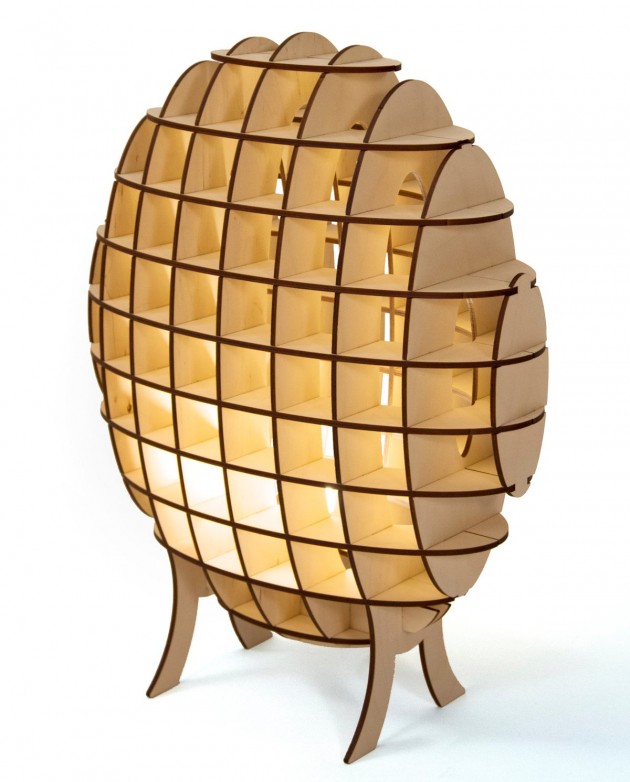
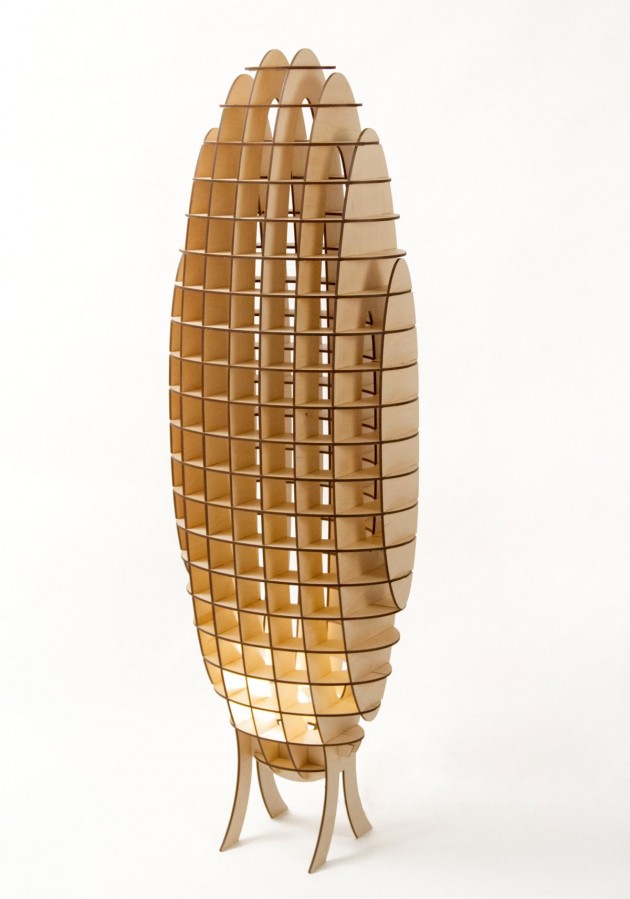
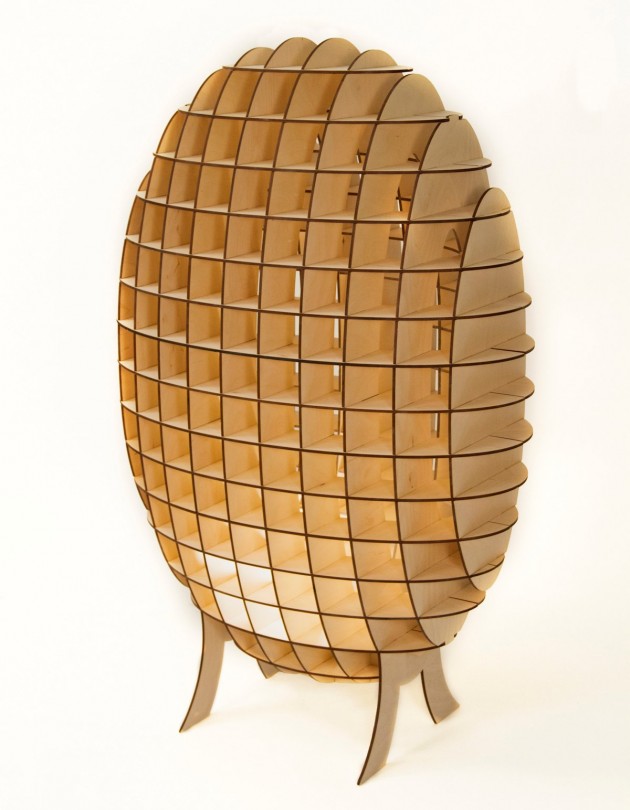
Lampyridae Lamps by Monica Correia

Monica Correia Design Studio will launch three lamps from the Lampyridae collection in Milan next week at EDIT by Designjunction.

la_050414_02

la_050414_03

la_050414_04

la_050414_05

Description

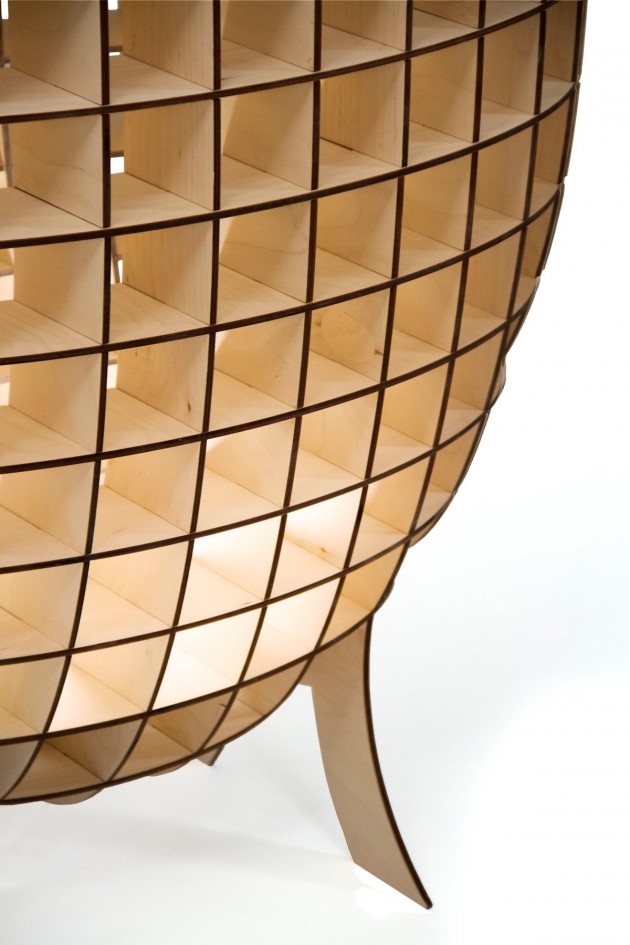
Lampyridae Lamps were inspired in the form and warm light of fireflies. Their sizes and sculptural forms make the lamps unique and modern. The designs started as 3D models that were then turned into 2D slices. The shapes were cut in plywood using Computer Numerical Control (CNC) laser technology and assembled to create the 3D forms. The process minimized the packaging and weight, and it left the material with dark edges that were not removed to reinforce the initial intention of warmth. When lit the light resembles the sunset light.

The studio focuses on the challenge of transforming ideas into functional and aesthetically pleasing unique objects. Monica Correia primarily works with digital technologies but also embraces traditional techniques. The scale of her work varies from ceiling installations to small functional objects.

The Lampyridae Lamp Collection will be on show at Stand R2 at the EDIT by Designjunction in Milan from 8 to 13 April 2014.

Design: Monica Correia Design Studio

[ccw-atrib-link]

Introduction to Environmental Management (Developments in Environmental Modelling)

This book provides a comprehensive survey of the various sub-disciplines which form the basis of environmental management. The book was written by experts in the three following categories: Natural Sciences topics such as soil, air and water pollution, water management, aspects of pesticides and gene technology; Social Sciences consisting of topics in countryside planning, environmental economics and law; and finally, subjects in Environmental Science and Ecology such as EIA and environmental management modelling are assessed. This volume is intended as an introductory overview of these topics and presents the tools required to practice environmental management. The book is expected to serve as a textbook and a reference book in teaching environmental management at a college or university level.

[ccw-atrib-link]

False Frontin': Our Favorite Dishonest Facades

Reinforced concrete and increasingly strong interior steel beams have almost made buildings’ exterior envelopes a relic of the past. While a building covering still provides crucial protection from the elements, and of course privacy, architects have taken liberties with the playful possibilities that false facades offer. Such film set aesthetics not only add visual interest to otherwise ordinary buildings, but their tendency to confuse viewers holds an uncanny appeal that riffs of the entire system of symbolic architecture. With an open mindset, this facade masquerade can provide endless entertainment (and make Robert Venturi proud). Join us in this study of form-follows-folly: Images courtesy of the AOC. Spa School by the AOC, London The brick wrap is designed to relate the building to its context, purposely taking on the function of communication as a flat skin, leaving the building itself to perform as a place for learning. Image via wikimedia.org Fire Station Number 4 by Venturi and Rauch, Columbus, Indiana The classic appropriation of the Western false front as high architecture, Robert Venturi’s famous fire station helped introduce the world to his ideas about irony and simplicity, all from …

[ccw-atrib-link]

Cocoon House / Studio Aula

Architects: Studio Aula
Location: , Nagano, Japan
Architect In Charge: Mitsuru Yoshida,Kyoko Hoshina
Year: 2013
Photographs: Ippei Shinzawa

From the architect. Our client is a family with a couple in fifties, their two children and mother. In Cocoon house our mission was making-over in which the premise is narrow at the approach and deep inside. We try to functionally make use of it with its old garden. For instance, on the north side facing to a road we laid storage and space to take in light and winds.

The vertical bar screen in Japanese style blocks others’ eye and a fine devise to hold such functions. Also we put a multipurpose earth floor to make an entrance as well from the north to the south garden. This assures the functional elements such as a corridor and a storage space, also becomes a public space to combine inside with outside and to get visitors. The inside materials of construction are flamed in squares as iconic form, and the layer with the chequer patterns reminding of the thread of cocoon managed to generate the diversity of forms. We have also done the makeover of the garden. The old one was conventionally symbolic with chunks of stone work allegedly representing a ship on the sea. but we redefined it to satisfy the quality of life converting with the steppingstones led from the earth floor. Although industrialized houses are spreading over in the neighbourhood we have aimed integration of the old and the new in Japanese symbolic landscape.

Built in a unifom neighbourhood, this house aims at utilizing a garden with an old pine tree and the stone work and caring for the Japanese way of life and traditional forms; the earth flooor corridor  works in some functional ways; the bar screen taking in light and wind under the large roof protects privacy; the bamboo fence encourages simplified maintanance on the owener’s own.

They used to live in an old house in a hamlet with depopulation in the Kiso region. It was a sericultural farm house built with wood, paper, and mortar in the Meiji period (about a hundred years old). Also Kiso is surrounded by conifer forests and clear water in a mountain range which is quite filled with natural beauty in Japan. The client loved the house and the neighbourhood, but an accidental mischief occured and it determined moving to a newly purchaseed secondhand house with a lovely old garden in adjacent suburbia.

After all this house turned out to be poorly earthquake-proof which leads to demolition and rebuilding. Our goal in this project is to capture Japanese style in order to confort the client family.

We managed to make use of much wood for the interior and the beam construction and to care for their remembrance of the old house and the locality. Actually they own a mountain forest in the hamlet and we used the Hinoki (Japanese cypress) timber planted in their son’s birth for a part of constructual materials.

Cocoon House / Studio Aula © Ippei Shinzawa
Cocoon House / Studio Aula Floor Plan
Cocoon House / Studio Aula Elevation
Cocoon House / Studio Aula Site Plan

[ccw-atrib-link]

Pollution Solutions: 10 Weird And Wonderful Inventions To Make You Breathe Easy (Or Not)

With the impending doom of climate change looming closer and closer, NGOs, nonprofits, and governments around the world are asking citizens to drive less, buy local, and “reduce, reuse, and recycle.” However, there are certain places where these gestures may not be enough—cities where years of heavy industry, inefficient energy usage, and a lack of environmental regulation have contributed to massive pollution, non-potable water, and smog-drenched skies (we’re looking at you, China). Indeed, the situation in some areas is so dire that the United Nations’ Intergovernmental Panel on Climate Change is on the brink of mandating governments to physically extract greenhouse gases from the air. But, other than simply planting a bunch of trees all over the place, how exactly does one do this? With the heat from the UN—and with billionaire patrons like Richard Branson dangling a giant money-carrot—the race is on to develop innovative methods and technologies to assist in carbon dioxide removal. The scope of concepts is vast, ranging from god-like weather control and geo-engineering efforts, to personal breathing-capsules and grassroots DIY filters. Here are some of the most interesting—and strangest—contenders in this worldwide race to eradicate pollution. AP Photo/Ng Han Guan via …

[ccw-atrib-link]

2014 RIBA Norman Foster Travelling Scholarship Call for Entries

The 2014 RIBA Norman Foster Travelling Scholarship has launched and is inviting applications from schools of architecture around the world. A £6,000 grant will be awarded to one student by a panel of judges which includes Lord Foster and the President of the RIBA.

First established in 2006, the scholarship is now in its seventh year and is intended to fund international research on a topic related to the survival of our towns and cities, in a location of the student’s choice. Past RIBA Scholars have travelled through the Americas, Europe, Africa, South East Asia, the Middle and the Far East, and Russia.

Proposals for research might include: learning from the past to inform the future; the future of society; the density of settlements; sustainability; the use of resources; the quality of urban life; and transport.

The deadline for submissions is Friday 25 April 2014. Further details and an application form can be downloaded from the RIBA website architecture.com/fosterscholarship.

[ccw-atrib-link]

BIM Handbook: A Guide to Building Information Modeling for Owners, Managers, Designers, Engineers and Contractors

“The BIM Handbook is an extensively researched and meticulously written book, showing evidence of years of work rather than something that has been quickly put together in the course of a few months. It brings together most of the current information about BIM, its history, as well as its potential future in one convenient place, and can serve as a handy reference book on BIM for anyone who is involved in the design, construction, and operation of buildings and needs to know about the technologies that support it. The need for such a book is indisputable, and it is terrific that Chuck Eastman and his team were able to step up to the plate and make it happen. Thanks to their efforts, anyone in the AEC industry looking for a deeper understanding of BIM now knows exactly where to look for it.”
—AECbytes book review, August 28, 2008 (www.aecbytes.com/review/2008/BIMHandbook.html)

Discover BIM: A better way to build better buildings

Building Information Modeling (BIM) offers a novel approach to design, construction, and facility management in which a digital representation of the building process is used to facilitate the exchange and interoperability of information in digital format. BIM is beginning to change the way buildings look, the way they function, and the ways in which they are designed and built.

The BIM Handbook, Second Edition provides an in-depth understanding of BIM technologies, the business and organizational issues associated with its implementation, and the profound advantages that effective use of BIM can provide to all members of a project team. Updates to this edition include:

Completely updated material covering the current practice and technology in this fast-moving field

Expanded coverage of lean construction and its use of BIM, with special focus on Integrated Project Delivery throughout the book

New insight on the ways BIM facilitates sustainable building

New information on interoperability schemas and collaboration tools

Six new case studies

Painting a colorful and thorough picture of the state of the art in building information modeling, the BIM Handbook, Second Edition guides readers to successful implementations, helping them to avoid needless frustration and costs and take full advantage of this paradigm-shifting approach to construct better buildings that consume fewer materials and require less time, labor, and capital resources.

[ccw-atrib-link]

Los Angeles Museum of the Holocaust / Belzberg Architects

Architects: Belzberg Architects
Location: 100 The Grove Drive, Los Angeles, CA, USA
Architect In Charge: Hagy Belzberg
Design Team: Andrew Atwood, Barry Gartin, Brock DeSmit, Carina Bien-Wilner , Christopher Arntzen, Cory Taylor, Daniel Rentsch, David Cheung, Eric Stimmel, Erik Sollom, Justin Brechtel, Philip Lee, Lauren Zuzack
Area: 27,000 sqm
Year: 2010
Photographs: Iwan Baan, Benny Chan

Project Manager: Aaron Leppanen
Structural: William Koh & Associates
Contractor: Winters-Schram
Mechanical: John Dorius & Associates
Electrical: A&F Consulting Engineers
Methane Engineer: Carlin Environmental
Environmental Engineer: Enviropro, Inc.

From the architect. The new building for the Los Angeles Museum of the Holocaust (LAMOTH) is located within a public park, adjacent to the existing Los Angeles Holocaust Memorial.  Paramount to the design strategy is the integration of the building into the surrounding open, park landscape. The museum is submerged into the ground allowing the park’s landscape to continue over the roof of the structure.  Existing park pathways are used as connective elements to integrate the pedestrian flow of the park with the new circulation for museum visitors.

The pathways are morphed onto the building and appropriated as surface patterning.  The patterning continues above the museum’s galleries, further connecting the park’s landscape and pedestrian paths. By maintaining the material pallet of the park and extending it onto the museum, the hues and textures of concrete and vegetation blend with the existing material palette of Pan Pacific Park.  These simple moves create a distinctive façade for the museum while maintaining the parks topography and landscape.  The museum emerges from the landscape as a single, curving concrete wall that splits and carves into the ground to form the entry.  Designed and constructed with sustainable systems and materials, the LAMOTH building is on track to receive a LEED Gold Certification from the US Green Building Council.

Circulatory Strategy:

Patrons begin their procession at the drop off adjacent to the park.  Their approach is pervaded by sounds and sights of laughter and sport—of kids playing in the park and picnicking with their families.  Because the building is partially submerged beneath the grassy, park landscape, entry to the building entails a gradual deterioration of this visual and auditory connection to the park while descending a long ramp.  Upon entering, visitors experience the culmination of their transition from a playful and unrestrained, public park atmosphere to a series of isolated spaces saturated with photographic archival imagery.

As part of the design strategy, this dichotomous relationship between building content and landscape context is emphasized to bolster the experience inside the museum and allegorically correlate the proximity with which European forest revelers enjoying public parks were to sites of horrific and inhumane acts being carried out in 1930’s and 40’s.  Visitors exit the museum by ascending up to the level of the existing monument, regaining the visual and auditory connection with the park environs.

The first room incorporates a large, single interactive table, mimicking a conceptual “community” or dinner table. The exhibit brings a large group of patrons together around one interactive exhibit.  The lighting of the interior galleries dim as the visitor steps down into the subsequent rooms where two separate exhibits display divide the singular crowd—diminishing the “community” provided by people nearby.  Through the third room and into the fourth, the floor continues to step down as ambient lighting becomes scarcer leading individuals to the room titled, “Concentration Camps.”

The ceiling is low, and the room is almost entirely illuminated by individual -monitors—about the size of a notebook—which limits viewing to a single spectator.  The visitor is now confined to the most isolated, darkest and volumetrically concentrated underground area in the museum.  The journey from this point forward is one of ascension and of finding the comfort of familiar space as floor levels begin to rise and natural lights begins to penetrate the interior once again.  The final ascent up to the existing monument is filled with sights and sounds of unrestricted park land.

Los Angeles Museum of the Holocaust / Belzberg Architects © Iwan Baan
Los Angeles Museum of the Holocaust / Belzberg Architects © Benny Chan
Los Angeles Museum of the Holocaust / Belzberg Architects © Iwan Baan
Los Angeles Museum of the Holocaust / Belzberg Architects © Benny Chan
Los Angeles Museum of the Holocaust / Belzberg Architects © Iwan Baan
Los Angeles Museum of the Holocaust / Belzberg Architects © Benny Chan
Los Angeles Museum of the Holocaust / Belzberg Architects © Iwan Baan
Los Angeles Museum of the Holocaust / Belzberg Architects © Benny Chan
Los Angeles Museum of the Holocaust / Belzberg Architects © Iwan Baan
Los Angeles Museum of the Holocaust / Belzberg Architects © Benny Chan
Los Angeles Museum of the Holocaust / Belzberg Architects © Iwan Baan
Los Angeles Museum of the Holocaust / Belzberg Architects © Benny Chan
Los Angeles Museum of the Holocaust / Belzberg Architects © Iwan Baan
Los Angeles Museum of the Holocaust / Belzberg Architects © Benny Chan
Los Angeles Museum of the Holocaust / Belzberg Architects Floor Plan
Los Angeles Museum of the Holocaust / Belzberg Architects Site Plan
Los Angeles Museum of the Holocaust / Belzberg Architects Section
Los Angeles Museum of the Holocaust / Belzberg Architects South Elevation
Los Angeles Museum of the Holocaust / Belzberg Architects Elevation
Los Angeles Museum of the Holocaust / Belzberg Architects Diagram

[ccw-atrib-link]