Canterbury cathedral, UK (by Karel de Beer)
[ccw-atrib-link]
Most architectural standards references contain thousands of pages of details—overwhelmingly more than architects need to know to know on any given day. The Architecture Reference & Specification Book contains vital information that’s essential to planning and executing architectural projects of all shapes and sizes, in a format that is small enough to carry anywhere. It distills the data provided in standard architectural volumes and is an easy-to-use reference for the most indispensable—and most requested—types of architectural information.

[ccw-atrib-link]
Read the rest of Stunning Lakeside Villa in Austria Boasts an Amazing Wooden Shading Structure
Permalink |
Add to
del.icio.us |
digg
Post tags: Alexander Diem, Austrian architecture, facade patterns, lakeside villa Austria, patterns, residential architecture, traditional patterns, Viennese architects, wood facade, wood patterns, wood screen, wooden shade screens
[ccw-atrib-link]
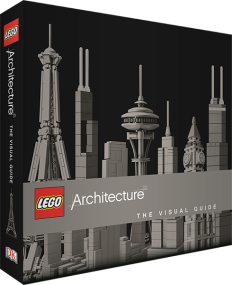
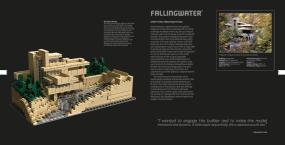
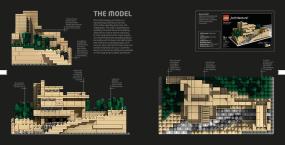
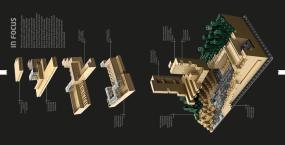
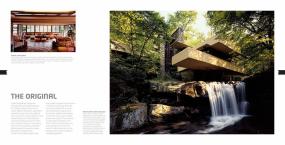
Created in close collaboration with The LEGO Group and Adam Reed Tucker, LEGO® Architecture visionary, LEGO Architecture: The Visual Guide takes a deep look at the artists, builders, and inspiration behind the LEGO Architecture series. Beautifully illustrated and annotated, this visual guide allows you to explore the LEGO team’s creative process in building and understand how LEGO artists translated such iconic buildings into these buildable LEGO sets. Stunning images and in-depth exploration of the real buildings like the Guggenheim™ or the Empire State Building, on which the LEGO Architecture series is based, provide you with a comprehensive look at the creation of these intricate sets. Learn why the LEGO team chose certain pieces and what particular challenges they faced. Read about the inspiration behind the creative processes and what designing and building techniques were used on various sets. Featuring profiles of the LEGO artists and builders who created the series and packaged in a sleek protective slipcase, LEGO Architecture: The Visual Guide is the ultimate illustrated tour of the LEGO Architecture series in all its micro-scale detail.
Iconic buildings reimagined in LEGO bricks
Sleek, stylish, and perfectly proportioned, LEGO Architecture models are as inspirational as the landmark buildings and structures they celebrate. Go on a stunning photographic tour of the models, with unique insights into the creative process behind their designs.
 View larger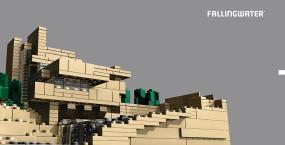
 View larger
  View larger
  View larger
This fascinating guide includes a foreword by renowned LEGO architectural artist Adam Reed Tucker. Tucker strives to capture the essence of a particular architectural landmark in its pure sculptural form. He does not view his models as literal replicas, but rather as artistic interpretations using LEGO bricks as a medium. As he continues to explore how to capture new LEGO Architecture buildings with LEGO bricks and plates, he finds the possibilities and challenges they offer almost magical.
Table of Contents: Foreword Introduction Timeline LEGO Artist Profiles The Creative Process Fallingwater in Development Glossary LEGO Cityscape in Scale Solomon R. Guggenheim Museum Fallingwater The White House Farnsworth House Rockefeller Center Robie House Brandenburg Gate Sydney Opera House Big Ben Villa Savoye Sungnyemun The Leaning Tower of Pisa Imperial Hotel United Nations Headquarters The Eiffel Tower Trevi Fountain John Hancock Center Willis Tower Empire State Building Seattle Space Needle Burj Khalifa Marina Bay Sands Index Acknowledgments
[ccw-atrib-link]
Roman Architecture (HSAR 252) Professor Kleiner introduces the wide variety of Roman buildings covered in the course and links them with the theme of Roman u…
[ccw-atrib-link]
The Architectural Design major at Stanford integrates engineering and architecture blending innovative architectural design with cutting-edge engineering tec…
[ccw-atrib-link]
Architecture is a strange mixture of persistence and flux, an amalgamation of elements — some that have been around for over 5,000 years and others that were (re)invented yesterday. The fact that these elements change independently of each other, according to different cycles and economies, and for different reasons, turns each building into a complex collage of the archaic and the current, the site-specific and the standard, mechanical smoothness and the spontaneous. Only by looking at the elements under a wide lens can we recognize the cultural preferences, forgotten symbolism, technological advances, mutations triggered by intensifying global exchange, climatic adaptions, political calculations, regulatory requirements, new digital regimes, and, somewhere in the mix — the ideas of the architect that constitute the practice of architecture today.
A collection of these essential elements into 15 books in a package launched at the 2014 Venice Biennale that allows us to look through a microscope at the real fundamentals of our buildings and see again the essential design techniques used by any architect, anywhere, anytime.
[ccw-atrib-link]
Read the rest of PHOTOS: Take a Look Inside Shigeru Ban’s Spectacular New Aspen Art Museum!
Permalink |
Add to
del.icio.us |
digg
Post tags: “sustainable architecture”, art museum, Aspen, aspen art museum, colorado, Daylighting, eco art museum, eco design, eco museum, green architecture, green design, green museum, new aspen art museum, rooftop deck, rooftop sculpture garden, screen facade, shade screen, shigeru ban, Shigeru Ban Architects, skylights, sun shade, Sustainable Building, sustainable design, woven screen
[ccw-atrib-link]
In order to master the foundation of architecture, you must first master the basic building blocks of its language; the definitions, function, and usage. The Language of Architecture provides students and professional architects with the basic elements of architectural design, divided into twenty-six easy-to-comprehend chapters. This visual reference includes an introduction to architecture design, historical view of the elements, as well as an overview of how these elements can and have been used across multiple design disciplines. Whether you’re new to the field or have been an architect for years, you’ll want to flip through the pages of this book and use it as your go-to reference for inspiration and ideas. This comprehensive learning tool is the one book you’ll want as a staple in your library.
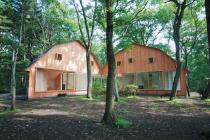 Atelier Bow Wow
 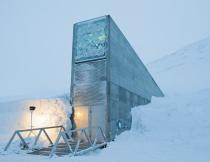 The Global Seed Vault designed by Peter W. Soderman Environmental Context
One of the most important and pressing aspects of the design of a structure is its environmental context, a context that can either affect the building positively (as provide warmth or shade) or extremely negatively (as in erosion or collapse). Most characteristic of this context is that it is continuously transforming, either in predictable or unanticipated ways. And the building in turn has a responsibility toward that context: perhaps at worst it will coexist, but at best it will enhance it.
Extreme Variability
Architecture has a responsibility to anticipate that the environment in which it is situated will change, and often in quite unpredictable ways. Extreme weather—floods, earthquakes, hurricanes, and avalanches—introduce design parameters that situate a work in a specific environmental context. A building erected in a flood plain might be raised on stilts while one in a frequent avalanche zone might be wedge shaped and embedded into the mountainside.
Weather
Rates of environmental change can be more predictable, from a twenty-four-hour cycle to seasonal variations. A building’s anticipation of the behaviors of basic yet constantly changing environmental elements of sun, rain, and wind cannot only be traced in the placement and dimension of apertures, the slopes of roofs, and the materials used, but in the more fundamental placement of a building within its actual physical site.
[ccw-atrib-link]