Lucie Aubrac School / Saison Menu Architectes

Architects: Saison Menu Architectes
Location: , France
Architect In Charge: PassivHaus Conso Less than 15 KWHep / m² shon / year
Area: 3,200 sqm
Year: 2013
Photographs: Julien Lanoo

Co Contractors: Dumez-construction, Energelio-BET HQE Passif, Séchaud Bossuyt-BET Fluide
Characteristics: PassivHaus Conso Less than 15 KWHep / m² shon / year
Graphic Design, Signage, Colometry: Jessica BIDAULT
Client: City of Roubaix
Surface Utile: 2,140 sqm
Surface Plancher: 2 814 sqm
Cost: 6.8 M€ HT

From the architect. The concept of the building volume has a free form referring to the bag of balls for children. The covering, is a porous and vegetated layer and the beads are the program elements that come together to give shape to the project. The corners are rounded and the roofs are folded in order to generate an architecture that offers a gentle settling in the neighborhood. This effect is being reinforced by the white tone that catches light in the near and far vision. White is the color of the beginning. The white wooden facades combined with vegetation play as an indicator in an area where the brick dominates.

The spatial organization of this program presents an optimal performance in terms of accessibility, readability and fluidity of space, in order to create a learning “tool” where children are at the heart of their concerns.

The functional program which is divided into four volumes, reinforces the spatial visibility of the school. Two high volumes turn out to the city: one, containing classrooms in two levels, forms the corner of the streets, which is visible from distance; the other volume contains common functions, which is placed on the forecourt, acting as an urban label (marker), it offers a dual purpose: it shows the school entrances and the linear park trail. The third volume that occupies the center of the plot is the restaurant. It separates the two courts and connects the playgrounds.

By its small size, It also preserves the views between the future linear park and the rue du Luxembourg. The fourth volume settles in the border of the parcel in transition between maternal playground and the access to the court of delivery of the dairy. It is accessible from the Luxembourg Street and gathers technical areas of the school. Thus, the access to different parts of programs has been clearly identified and disposed at opposite sides of the plot to ensure the safety of children. Optimizing the circulations is the recurring theme in the spatial organization of the project. Storage spaces are located close to related classes, thereby helping to avoid unnecessary .

The classes are settled on both sides of the program. Educational gardens, planted courtyards, vegetated terraces are all the elements that contribute to stretch the ecological corridor atmosphere projected along the railway embankment to the Luxembourg street and vice versa.

The architecture amazes and surprises, it challenges the space and the sense, it generates bright and spacious paths, able to ensure the best reception and secure conditions for children, «a porous cocoon.» The volume is rich in its spatial form which is reinforced by the game of light and shadow. It is the white color that dominates ; it catches the light, plays with color variation brought by the presence of plants, the recently planted trees and the green roof terraces. The dominant monochrome is ruptured by the entrances and playgrounds level to bring this honey color, which tries to color the natural light.

The wood is used for the whole façade of the program. The outer shell is made of fixed wooden louvers arranged parallel to the façade or changing direction gradually to animate the facade. Some parts of them are colored using with shades ranging from yellow to orange in covered areas (courtyard entrance).

The building is compact and also thermally efficient without harming the functional quality of the program. The pebble shaped volumes give a high index of compactness, which limits heat loss. The materials and the construction components fulfill all the criteria of environmental protection inducing a limited variety. The design of dual concrete wall consists of a 200 mm inner structural web isolated by a rigid insulator (JACKODUR) of 280 mm, which is protected by 150mm facade supporting elements in wood and aluminum. The wooden slats fit into the laser cutting aluminum tubes anodized by bronze color.

The school anticipates the future developments in Mackelerie neighborhood, South promenade park and the Roubaix railway station district.

Lucie Aubrac School / Saison Menu Architectes © Julien Lanoo
Lucie Aubrac School / Saison Menu Architectes Floor Plan
Lucie Aubrac School / Saison Menu Architectes Detail Section

[ccw-atrib-link]
Kew Tree Top Walkway & Rhizotron / Marks Barfield Architects

Architects: Marks Barfield Architects
Location: Kew Gardens, Brentford Gate, London TW9 3AB, UK
Year: 2008
Photographs: Peter Durant, Courtesy of Marks Barfield Architects

Contractor: WS Britland
Consulting Structural Engineer : Jane Wernick Associates
Consulting Environmental Engineer : Atelier Ten
Quantity Surveyors : Fanshawe
Access : Jane Earnscliffe

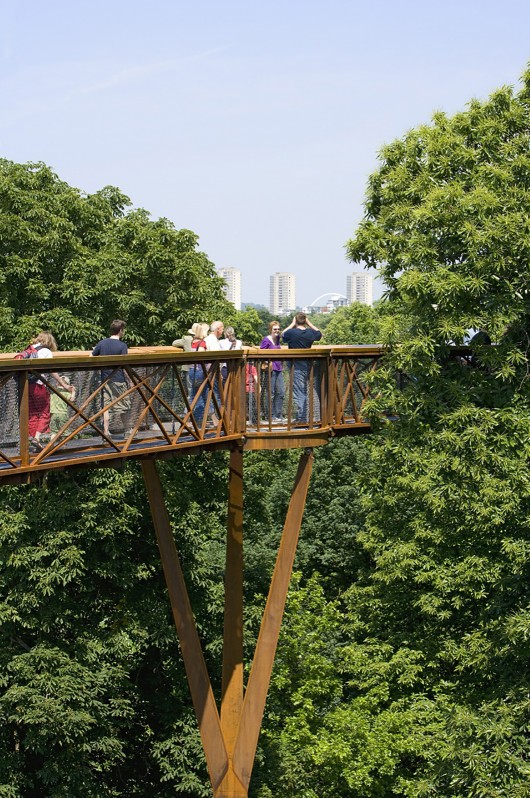
From the architect. Kew Garden’s Tree Top Walkway opened on 24th May 2008, Kew’s Year of the Tree, to over 9,000 visitors. The Walkway is a thrilling experience, taking visitors 18m high into the tree canopies for a birds-eye view of Kew, providing insights into the special role of trees in our breathing planet and the intimate views of a deciduous woodland and its inhabitants from within the tranquillity of the leaves. Inspiration for the walkway was drawn from the ancient Fibonacci sequence found repeatedly in nature.

In conjunction with the Walkway, an underground ‘Rhizotron’ exhibition space is attached and which explores various themes associated with tree root biology, climate change and the relationship between tree roots and microorganisms. Its appearance is inspired by a natural cracking within the earth to reveal a dark and dynamic space rich with exciting and educational content.

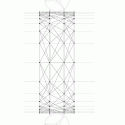
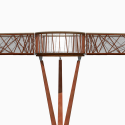
Marks Barfield Architects designed the walkway to be a visually light, discreet presence, at ease in its natural surroundings; while at the same time being unashamedly man-made. They decided to integrate the structure with the handrail support and drew on the Fibonacci sequence, which underlies many growth patterns in nature. By using the progressive series of numbers associated with the sequence (1,1,2,3,5,8,13,21,34, etc), we were able to work to create a ‘Fibonacci grid’ along a typical walkway truss, resulting in a higher density of elements near the trussends where the vertical loads are highest.

A major challenge was to strike a balance between enabling visitors to get as close as possible to the tree canopies and being mindful of the complex tree root system below ground. A radar survey was undertaken to understand the extent of tree root activity at the proposed pylon and pile foundation locations. This enabled strategic positioning of the 12-18m long concrete piles between the major roots ensuring safety and longevity for the tress and walkway.

Kew Tree Top Walkway & Rhizotron  / Marks Barfield Architects © Peter Durant
Kew Tree Top Walkway & Rhizotron  / Marks Barfield Architects Courtesy of Marks Barfield Architects
Kew Tree Top Walkway & Rhizotron  / Marks Barfield Architects © Peter Durant
Kew Tree Top Walkway & Rhizotron  / Marks Barfield Architects Courtesy of Marks Barfield Architects
Kew Tree Top Walkway & Rhizotron  / Marks Barfield Architects © Peter Durant
Kew Tree Top Walkway & Rhizotron  / Marks Barfield Architects Site Plan
Kew Tree Top Walkway & Rhizotron  / Marks Barfield Architects East Elevation
Kew Tree Top Walkway & Rhizotron  / Marks Barfield Architects Detail
Kew Tree Top Walkway & Rhizotron  / Marks Barfield Architects Rendering 1
Kew Tree Top Walkway & Rhizotron  / Marks Barfield Architects Rendering 2

[ccw-atrib-link]
Planet-O Lamp by Divisual

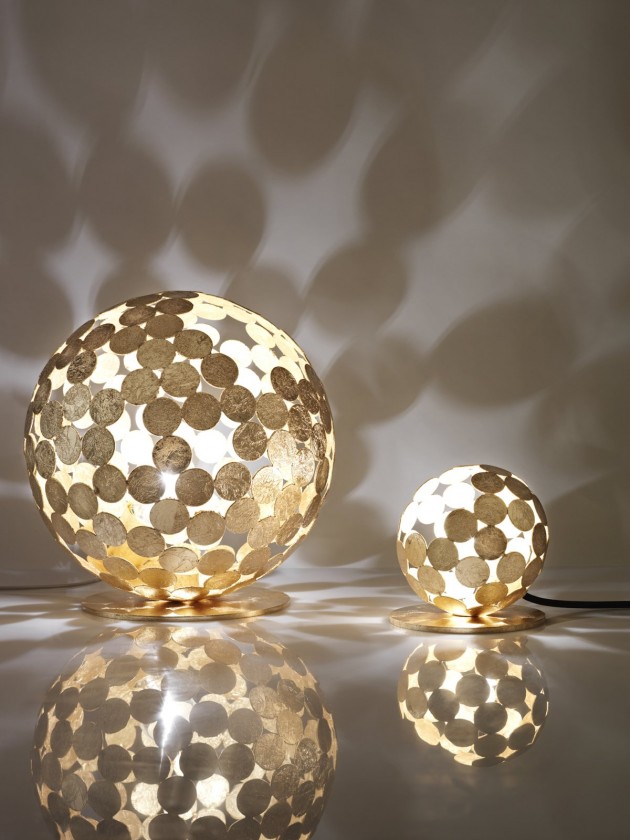
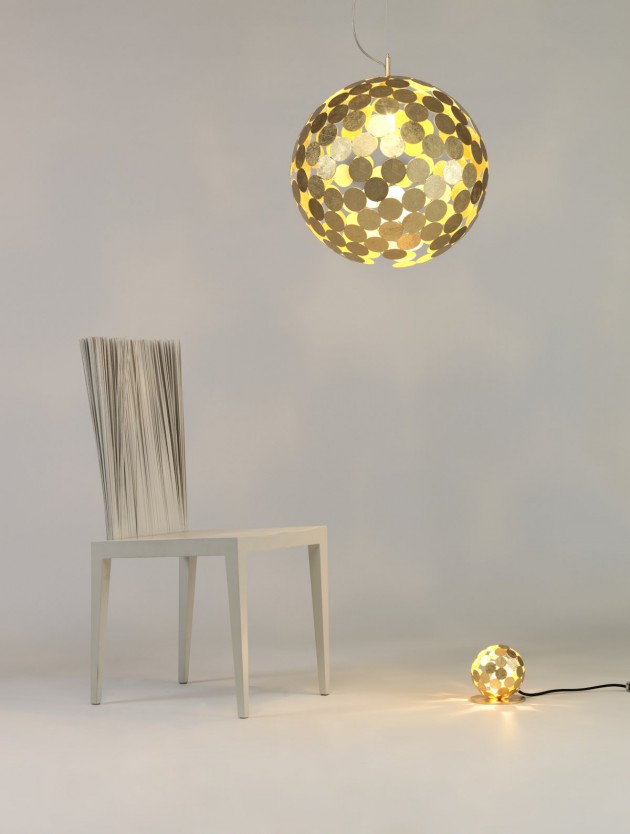
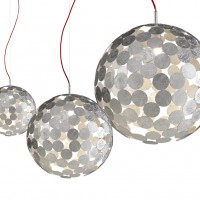
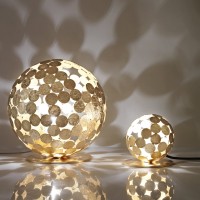
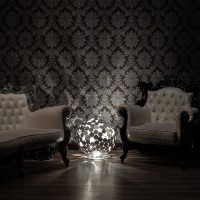
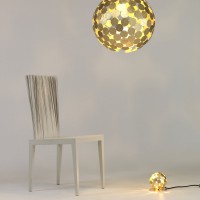
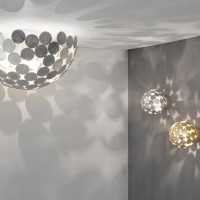
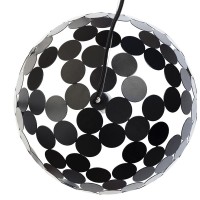
Divisual have designed the Planet-O Lamp, made from metal discs welded by hand.

pl_300414_02 pl_300414_04

Description

Planet-o is composed by about 250 disks of metal expertly welded by hand, through a process of brazing brass.

Planet-o is a body that enlightens it self and illuminates the ‘environment through the interplay of light and shadow.

Its main feature is that every lamp, coming by the expert hand of the workman and not through a digital model may not be reproducible. This peculiarity makes each product unique.

pl_300414_01
pl_300414_02
pl_300414_03
pl_300414_04
pl_300414_05
pl_300414_06
pl_300414_07
pl_300414_08
pl_300414_09

Design: Divisual

[ccw-atrib-link]
Seattle Aquarium Expansion Moving Forward

Although Seattle‘s Big Bertha—the giant tunnel boring machine powering the Alaskan Way Viaduct replacement tunnel alongside Seattle’s waterfront—will be delayed until next March for repairs, the nearby Seattle Aquarium is moving steadily ahead with its plans for a major expansion. The institution has just brought in San Francisco–based EHDD principal Marc L’Italien, who will lead […]

[ccw-atrib-link]
Doncaster Civic Office / Cartwright Pickard Architects

Architects: Cartwright Pickard Architects
Location: Waterdale, Doncaster, South Yorkshire, UK
Year: 2012
Photographs: Hundven Clements Photography

Contractor: Wates Construction
Structural: Arup
Cost Consultant: Davis Langdon
Landscape Architect: Grontmij
Acoustic Engineer: AEC

From the architect. Design

The contemporary five-storey building is designed around a central atrium which brings in natural light, connects spaces together, and provides passive ventilation. The highly efficient plan increases the net-to-gross floor area to 86%. Adaptability of space is fundamental, ensuring easy modification to suit future generations’ working practices.

The ground floor of the building provides public service facilities, including the One-Stop-Shop, plus support facilities for the building, whilst upper floors provide office space for staff. The One-Stop-Shop and Council Chamber are located at the front of the building, overlooking the new square and allowing passers-by to observe democracy in action.

Office floor plates have been designed to incorporate an open plan formation which facilitates flexible sub-division of office space, allowing for open plan desk arrangements, maximising the usable life of the building and reducing the overall running costs for the Council. The use of quality building materials was a necessity, whilst promoting sustainability and low-energy principles.

Appearance

The council chamber façade is clad with an abstract pattern of coloured, glazed terracotta baguettes. Nearly 3,200 tiles in 12 different colours have been installed, creating a focal point and a unique identity. Terracotta’s longevity and sustainability make it an ideal choice for the building, manufactured from natural robust materials, it is low maintenance and extremely weatherproof.

A high-quality concrete structural frame has been left exposed inside the building, providing thermal mass, fire and acoustic benefits to the scheme. The finish avoids the need to plasterboard, saving on even more costs. Timber panelling has been used to create a warm visual contrast to the concrete and also acts as an acoustic absorber soaking up any noise generated in the atrium.

Sustainability

The scheme takes a holistic view of sustainable design, integrating environmental, structural and architectural elements to create a low energy solution, achieving a BREEAM Excellent rating.

Passive, rather than active measures have been utilized to ensure lower running costs and significantly less maintenance. It is expected that these measures will achieve huge savings for the council. The central atrium maximises natural ventilation throughout the building, significantly reducing air handling. Via the elevations, the atrium also maximises natural daylight, reducing the need for artificial lighting.

The use of a green roof enables sustainable drainage and provides a natural habitat for wildlife. Rainwater harvesting will enable the re-use of any unabsorbed water for WC flushing. A selection of materials were chosen from the BRE Green Guide, minimising environmental impact.

Value for Money

Staircases, M&E plant and vertical service risers were prefabricated offsite and craned into place, reducing the overall cost and programme time, whilst improving the quality of these components.

With construction costs within budget, the new civic offices are without doubt a ‘model of modesty’, maintaining the highest quality finishes whilst ensuring that the Council’s operational costs remain streamlined beyond project completion.

Doncaster Civic Office / Cartwright Pickard Architects © Hundven Clements Photography
Doncaster Civic Office / Cartwright Pickard Architects Site Plan
Doncaster Civic Office / Cartwright Pickard Architects Floor Plan
Doncaster Civic Office / Cartwright Pickard Architects South Elevation
Doncaster Civic Office / Cartwright Pickard Architects West Elevation
Doncaster Civic Office / Cartwright Pickard Architects North Elevation
Doncaster Civic Office / Cartwright Pickard Architects East Elevation
Doncaster Civic Office / Cartwright Pickard Architects Section

[ccw-atrib-link]
Pak Loh Times Square Restaurant / NC Design & Architecture

Architects: NC Design & Architecture
Location: Times Square Car Park, Causeway Bay,
Area: 6,000 sqft
Photographs: Nathaniel McMahon

Interior Design: NC Design & Architecture
Design Team: Nelson Chow, Chris Lam, Yazh Yip, Pierre Wu
Furniture Designer: Bridge Lam
Contractor: Kin Wah Decoration Limited
Custom Lighting Supplier: Ricardo Lighting Limited

From the architect. Prominently located on the 10th floor of the Times Square Shopping Center in Causeway Bay, Hong Kong, Pak Loh Chiu Chow Restaurant by NCDA is the latest addition to the multi-outpost Family owned Restaurant Group. Established in 1967, Pak Loh is locally renowned for its traditional Chiu Chow cuisine, which originates from the coastal region of Guangdong Province. To cater to the evolving tastes of the newest generation of Hong Kong diners, Pak Loh’s mission is to bring new elements to popular conventional dishes using innovative techniques and premium seasonal ingredients. As a design strategy, NCDA interpreted the mission statement and created a 6000 SF restaurant that represents the convergence of the old and the new through a synthesis of vintage references and streamlined modern details.

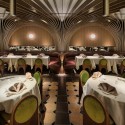
Arriving at the restaurant, diners pass through a curved passageway comprised of faceted brass vertical screens which leads to the main wood covered dining room. Placed on either side of the entrance, two curvilinear VIP rooms allow for a gradual passage from the bustling mall into the cocoon like wood interior of the main dining space.  The compressed entryway accentuates the generous volume of the main dining room beyond, and in turn the transition provides a calm yet discreet experience for the patrons as they enter and leave the restaurant. 

Dominating the main dining room, the vaulted walnut veneer ceiling structure references the spirit of 1960’s Hong Kong in a futuristic cutting-edge manner. The ribbed CNC milled ceiling structure consists of 20 half arches, which are rotated and repeated at angular increments to cover the entire ceiling. The ceiling geometry results in a cost effective and relatively simple installation that yields a unique and complex form.  The wood clad structure offers good sound absorption properties which helps to reduce noise level in an otherwise loud space.  Bespoke wall sconces and suspended light fixtures are being placed strategically to create a rythmical pattern that further highlights the delicate framework of the ribbed structure. 

While the vaulted structure of the main dining room appears airy and larger than life, attention to small details and materials offer a comfortable and intimate scale at each of the dining zones.  For instance, custom upholstered burgundy leather banquettes with horizontal mirrors and 60’s geometric print wallpaper define individual table groupings. Furthermore, custom olive green velour chairs with curved legs are design to echo the vaulted ceiling and to break the scale of the space down to more intimate components.

Efficiently located at the back of the restaurant, the bathroom is divided into male and female halves using a large central communal sink. Custom backlit male and female WC indicators are placed above each door in the manner of an aircraft installation, and leads the patrons to the corresponding toilet compartment where each one is cladded with a distinct color tiles.

In the design of Pak Loh, NCDA sought to avoid any direct links to the Chinese vernacular, while mixing modern and classic materials to create a comfortable and refined dining space that respects the 60’s Hong Kong manner of dining. Pah Lok Chiu Chow Restaurant showcases a holistic approach to restaurant design, seamlessly integrating the interior design, furniture, lighting fixtures, graphics, and staff uniforms. By defining an aesthetic from the mood and lighting of a space right down to its detailed ceiling construction, the end result is a visually striking yet highly functional contemporary restaurant.

Pak Loh Times Square Restaurant / NC Design & Architecture © Nathaniel McMahon

[ccw-atrib-link]
Coleraine Duplex / NatureHumaine

Architects: NatureHumaine
Location: Coleraine St, , Canada
Area: 3,135 sqft
Year: 2013
Photographs: Adrien Williams

From the architect. This project was completed for a developer/home builder at the intersection between Coleraine Street and a laneway in Montreal’s Point St-Charles neighborhood.

The basic program for this project required 2 row-homes on an 8.7m wide lot. After accounting for setbacks and other constraints, traditional planning approaches would have resulted in 2 long narrow houses, which severely lacked natural light. Our solution was to intertwine both units in a zigzag fashion, maximizing on natural light, and creating dynamic angular spaces. The two units intersect at the top floor to create an intimate space for a master bedroom, an office, and a terrace in each unit. This design was reinforced by the site’s footprint, which has a 75-degree angle at the intersection between the street and the laneway and further inspired the creation of angular forms and oblique perspective lines within the interior.

The building is composed of a brick base, which relates to the neighborhoods vernacular, and is topped with a contemporary angular volume clad in steel that cantilevers over the base. The minimalist interiors each have a double height space with a suspended wood platform. The stair, wrapped in a black expanded-steel handrail, ascends to the master bedroom where a reading nook bathes in natural sunlight.

Coleraine Duplex / NatureHumaine © Adrien Williams
Coleraine Duplex / NatureHumaine Ground Floor Plan
Coleraine Duplex / NatureHumaine Second Floor Plan
Coleraine Duplex / NatureHumaine Third Floor Plan
Coleraine Duplex / NatureHumaine Section
Coleraine Duplex / NatureHumaine Diagram

[ccw-atrib-link]