Purchase here: https://www.e-junkie.com/ecom/gb.php?c=cart&i=1298024&cl=188660&ejc=2.
[ccw-atrib-link]
Purchase here: https://www.e-junkie.com/ecom/gb.php?c=cart&i=1298024&cl=188660&ejc=2.
[ccw-atrib-link]
[ccw-atrib-link]
[ccw-atrib-link]
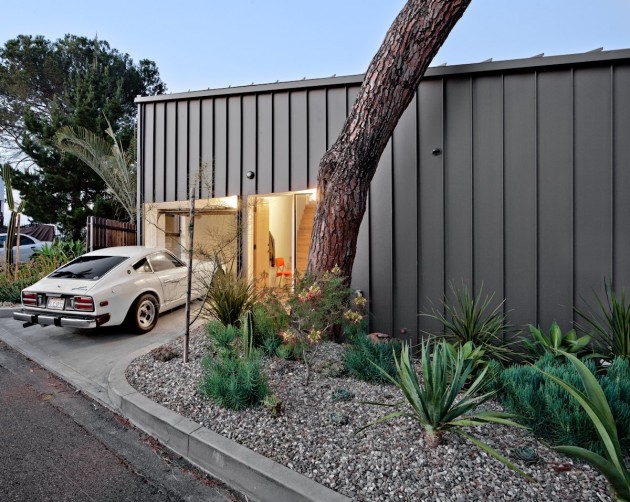
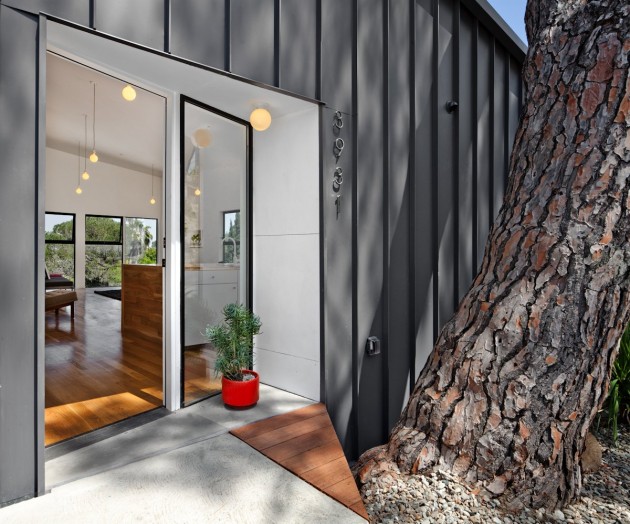
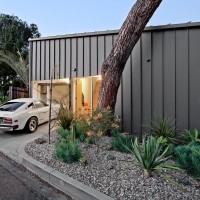
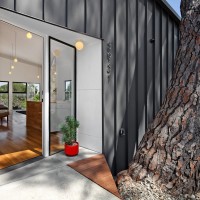
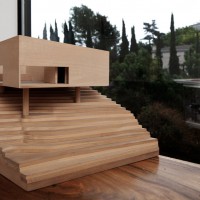
Anonymous Architects have designed the BIG & small House in Los Angeles, California.
Project description
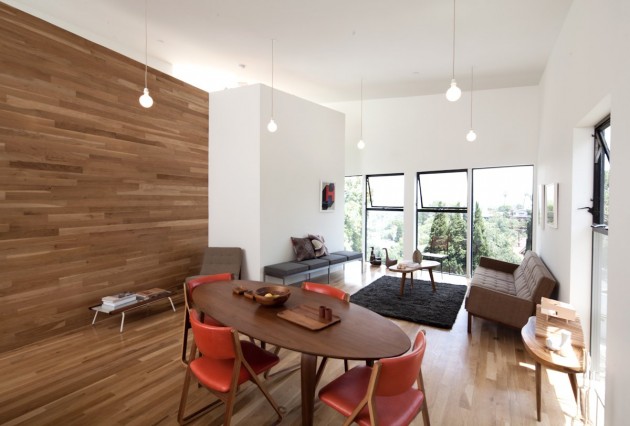
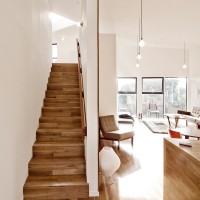
Starting with a vacant lot that was half of the typical minimum lot size, the objective was to compensate for the relatively small footprint of the house.
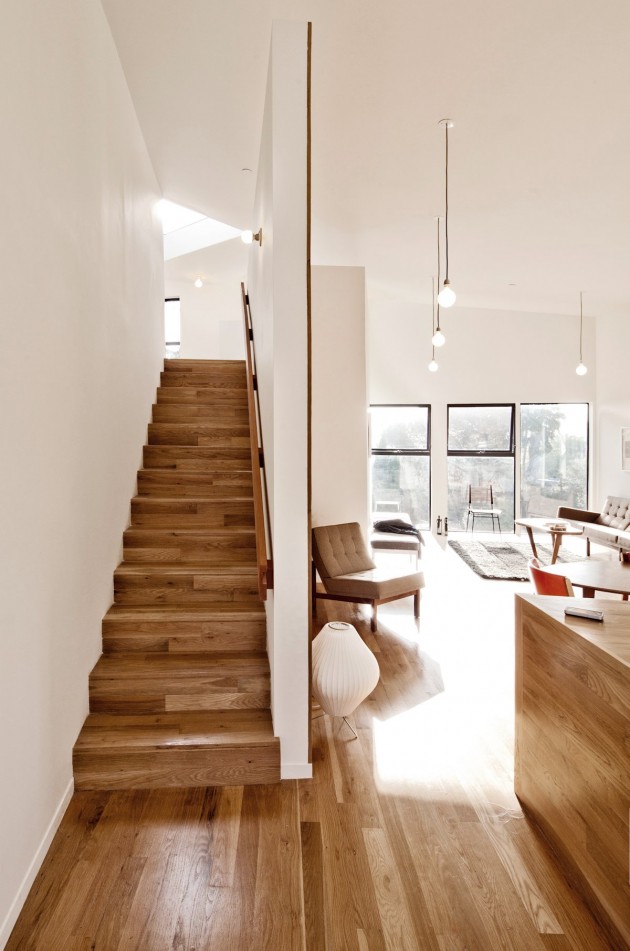
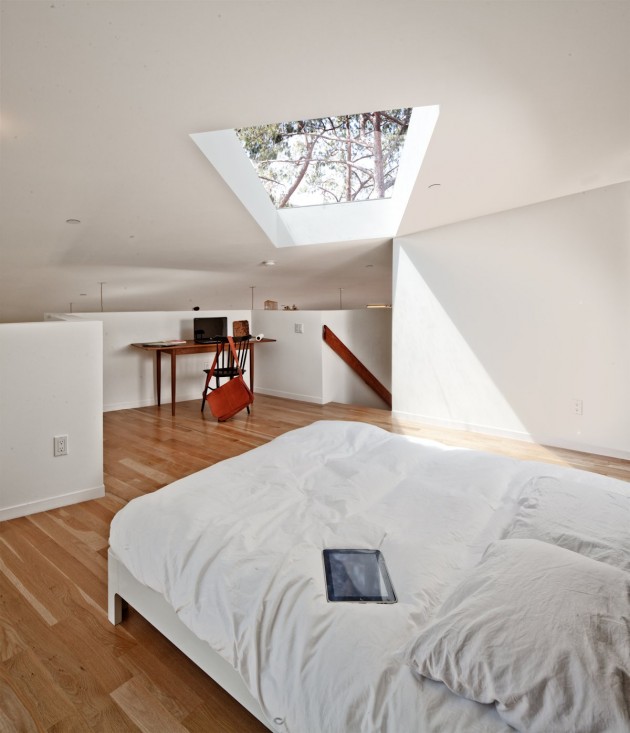
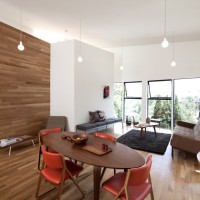
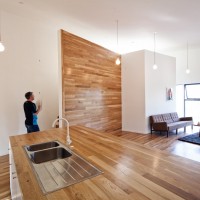
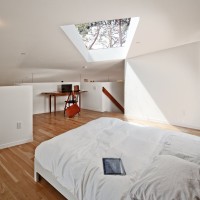
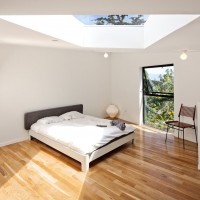
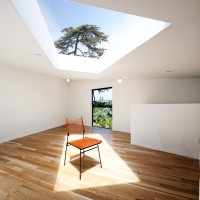
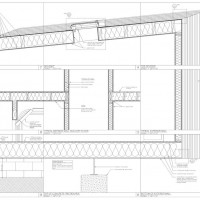
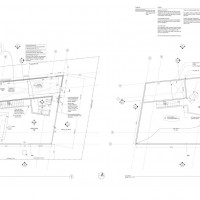
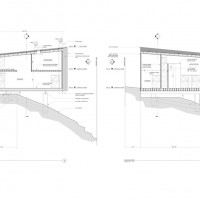
To achieve this there are only 2 full height walls inside the house which makes the main interior room nearly as large as the building footprint. This gives the house an open lofted feeling with very high ceilings and abundant natural light.
It is an inversion of expectation, so that the smallest house contains the largest room. What the house lacks in square footage it provides in volume.
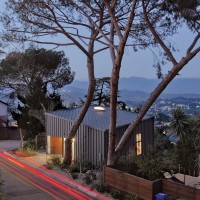
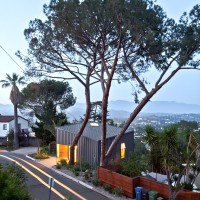
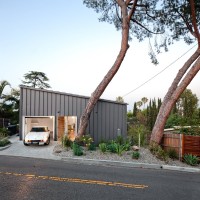
The free plan of the vacant lot is preserved since the house touches the ground only at the four small piles, giving full access to use the space between the house and the lot. The footprint of the foundation is in fact less than 20 sq.ft. and the house doesn’t touch the ground at any point.
The plan of the house follows the shape of the site which is an asymmetric parallelogram. This form resulted in unusual geometry inside and outside the dwelling and explains the shape of the house. The elevations of the house are designed to mirror the plan.
Architect: Anonymous
Photography: Steve King
[ccw-atrib-link]
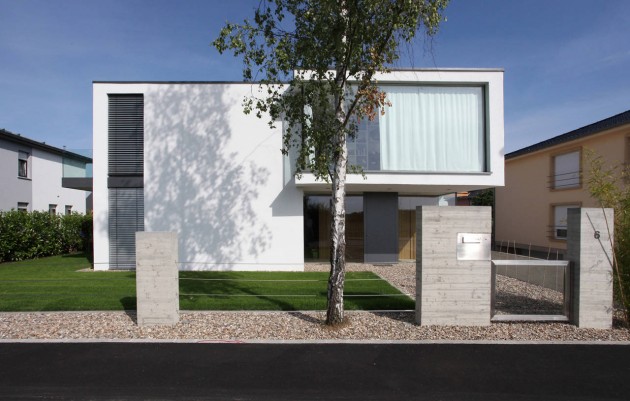
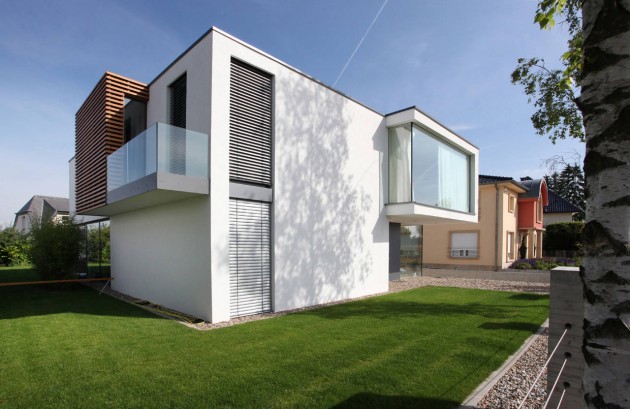
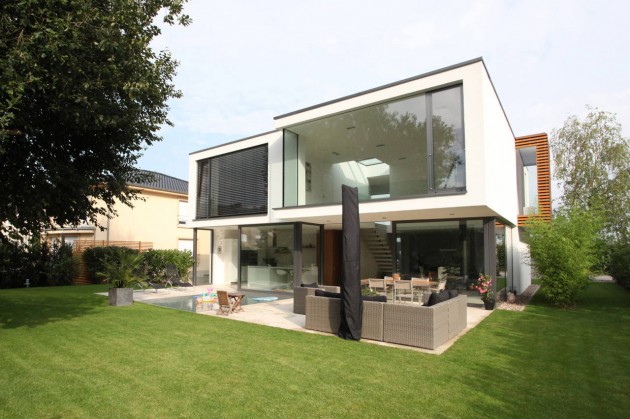
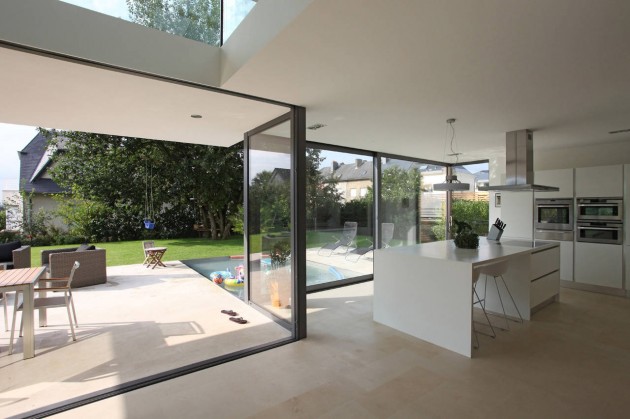
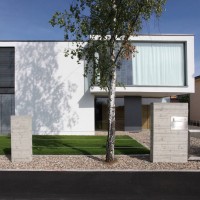
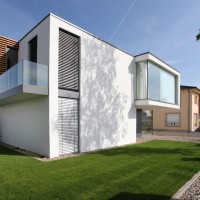
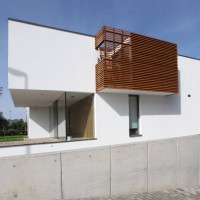
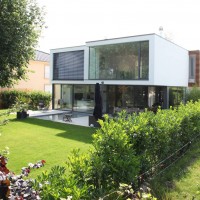
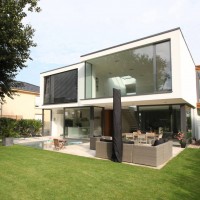
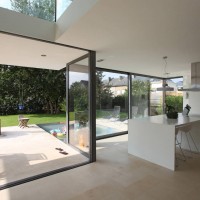
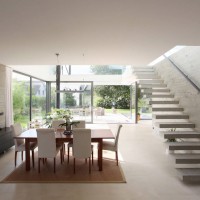
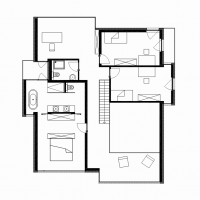
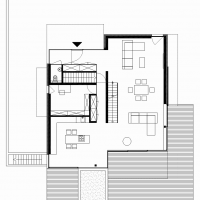
n-lab Architects designed this house for a family in Luxembourg.
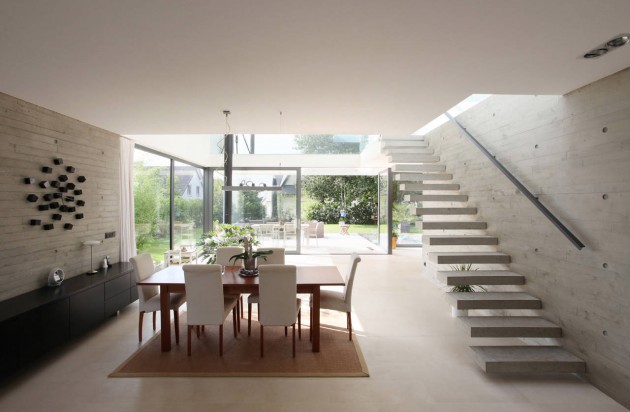
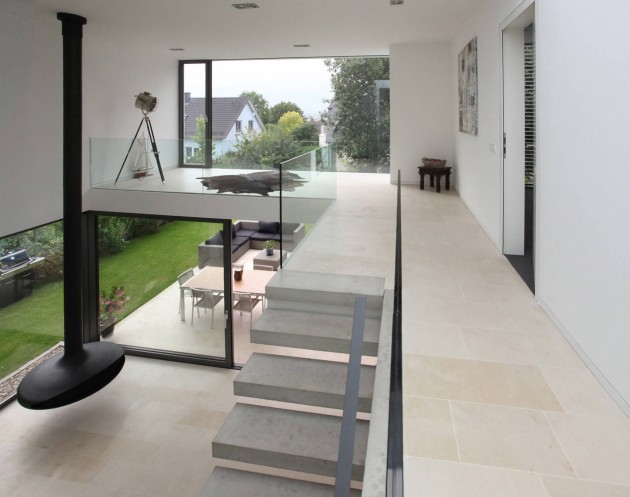
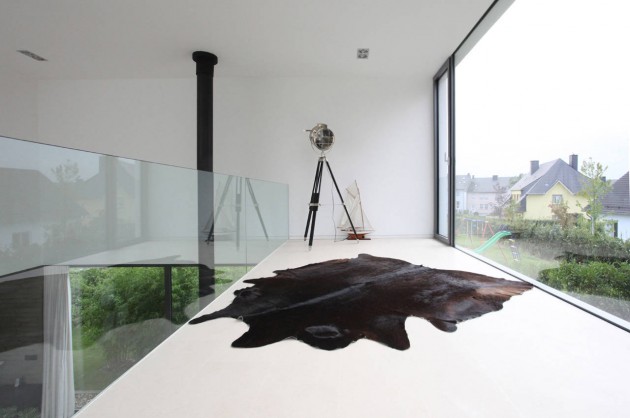
Description from n-lab Architects:
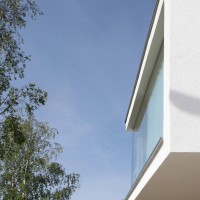
The clearly defined volumes play with the concepts of heaviness and lightness. A walk around the single-family house reveals firmly anchored volumes and floating bodies creating large overhangs. The four facades were treated with regard to local conditions. The few openings to neighboring buildings are partially covered in wooden slats in order to filter the views from and to the most private areas. The largest opening is on the garden side, where the entire first floor is raised off the ground.
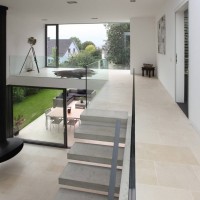
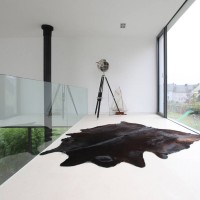
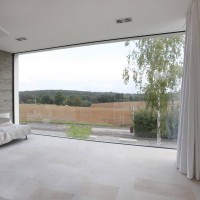
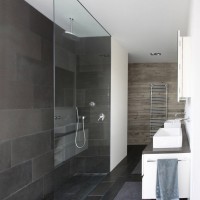
Architecture by n-lab Architects
.
[ccw-atrib-link]
This inspiring book chronicles the most influential ideas that have shaped architecture. Entertaining and intelligent, it provides a concise history of the subject, and is also a fascinating resource to dip into. Arranged in a broadly chronological order to show the development of architecture, the ideas that comprise the book include innovative and influential concepts, technologies, techniques and movements. Each idea is presented through interesting text and arresting visuals, and explores when the idea first evolved and the subsequent impact it has had up to the present day.

[ccw-atrib-link]
Developed soon after World War II, the de Havilland Beaver has become one of the most successful and long-lived designs in aviation history. The Beaver was conceived as a half-ton flying pickup truck” capable of setting down on land, water, and snow. Since its conception the Beaver has been adopted worldwide, becoming the floatplane of choice for island-hopping along the Pacific Northwest, flying into the Arctic, transporting missionaries and doctors into remote spots in Africa, and serving as a support aircraft in Antarctic expeditions. The Beaver also became the generals’ Jeep” during the Korean War and the generals’ favorite transport to fishing spots in peacetime.
[ccw-atrib-link]
Remote control vehicles are something both the young and old can enjoy. If you want to bring out the kid in you, RC vehicles Gear Guide can just be the perfect thing you’ve been looking for! RC Vehicles Gear Guide is equipped with rich info about the types of RC Vehicles, Toy-grade and Hobby-grade RC Vehicles, Kit or Ready-To-Run, On-Road and Off-Road Vehicles, Gas-powered and Electric-powered RC Vehicles, Size/Scale, Frequencies and Multiplayer Capacity and more! Go ahead, control those remotes and get the engines running!
About the Author: Robert Pattenson
Robert is an avid collector of all kinds of toy vehicles, especially radio controlled car models. This hobby of his started when his father, who was then a car mechanic, gave him his first set of Matchbox toy cars for his 5th birthday. Every Christmas and during his birthday, Robert would usually receive a different kind of toy car as a present from his dad. He took good care of all his toys and more than 20 years later, Robert now has 258 pieces of toy vehicle models. His collection, which came from varied sources, continues to grow with his current addiction on RC vehicles. With his passion for toys, Robert decided to put up a store which offers radio controlled vehicles of all sorts, and that is how Internet-RC.com was born.
[ccw-atrib-link]
The 361° Conference, an initiative by Indian Architect & Builder to create a relevant platform for dialogue on architecture in India, will take place on February 19th to the 21st in Mumbai. This year’s edition, based on the theme of “Architecture and Identity,” will include renowned speakers, including Steven Holl and Dr. B V Doshi. More details, after the break…
Conference Description
One of the oldest design forums in India, the 361° Conference is an initiative by Indian Architect & Builder (IA&B) to inspire a thought-exchange programme on relevant ideas in architecture and critical concerns of the discipline and thus, create a relevant and serious platform for dialogue on architecture in India.
The seventh edition of the 361° Conference is scheduled for the 19th-21st February 2014 at the Nehru Centre, Mumbai. This edition will deliberate on the theme ‘Architecture and Identity’. In the context of architecture, as we move further in the 21st century, we find incredibly diverse and individual trajectories of academia, practice and building. Within this diversity, we find a consistent struggle by individuals and groups to anchor ideas to their appropriate roots. Introspective and reflective in its essence, this search for the origins or the fundamentals is critical in contemporary architecture as the search is what determines the trajectory. This Conference will focus on the people and practices that have an investment in the idea of identity; whose work takes a critical position on this issue.
Speakers
Dr B V Doshi, India; Steven Holl, USA; William J R Curtis, France; Aniket Bhagwat, India; SPASM, India; Channa Daswatte, Sri Lanka; Dominic Sansoni, Sri Lanka; Minakshi Jain, India; Rick Joy, USA; Hector Fernandez Elorza, Spain; Lars Müller, Switzerland; and Kashef Mahboob Chowdhury, Bangladesh; Atelier Vylder Vinck Taillieu, Belgium; Carin Smuts, South Africa & Emre Arolat, Turkey.
For more information, visit: www.361degrees.net.in
361° Conference 2014: Architecture and Identity originally appeared on ArchDaily, the most visited architecture website on 09 Jan 2014.
send to Twitter | Share on Facebook | What do you think about this?
[ccw-atrib-link]
Architects: 2b architectes, nb.arch
Location: Corpataux-Magnedens, Switzerland
Design Team 2b Architectes: Stephanie Bender, Philippe Béboux
Design Team Nb.Arch: Sarah Nedi, Luc Bovard
Year: 2007
Photographs: Thomas Jantscher


Collaborators: Corina Ebeling, Gudrun Warnking, Stéphane Schers, Yves Macherel
Construction Management: Ruffieux-Chehab Architectes SA
Civil Engineer : EDMS ingénieurs, Nicolas Senggen
Landscape: Michèle Robin
Client: Commune de Corpataux-Magnedens

From the architect. The impression made by the new council offices building in Corpataux is both fascinating and irritating at the same time. On the one hand it has the almost archetypically simple form of a house with a pitched roof, while on the other it is ennobled through its envelope consisting of a carefully staggered tuff incrustation.

The stone used here brings to mind an old tuff quarry nearby and thus also recalls the history of the village. Through its intelligent positioning this public building creates a new square in the village. The simple external appearance with a calm sequence of windows is reflected in the interior in the clear and functional organisation of the different spaces: a circulation zone, offices for the local administration and a large multi-purpose room on the ground floor; cloakrooms and meeting rooms for local associations at basement level.

A clever use of the contrast between light and dark distinguishes the circulation zone from the main hall. The hall is also the “pièce de résistance” of the building. The concept of a building within a building strengthens the impression made by this pleasant and autonomous space. Its dark lined walls are given life by a dense sequence of projecting timber louvers that extend in a linear fashion from the floor to the internal outline of the pitched roof. In general this building manoeuvres its way between the everyday and the extraordinary and is particularly fascinating because here the normal is formulated in a special way, both internally and externally.


La Tuffière / 2b architectes + nb.arch originally appeared on ArchDaily, the most visited architecture website on 09 Jan 2014.
send to Twitter | Share on Facebook | What do you think about this?
[ccw-atrib-link]